26.10.2026
Unternehmen
Whether it is clothing, consumer goods or food, TGW Logistics ensures that goods arrive where they are supposed to. The Austrian intralogistics specialist manufactures mechatronics and robotics at its site in Marchtrenk. These include steel structure and conveyor technology components for logistics and material flow systems used by companies globally. The welding used in production is characterised by a wide variety of component variants, small batch sizes and short lead times. At the same time, the shortage of skilled workers is making the overall situation more challenging. To ensure production remains flexible and reliable in spite of this, TGW Logistics uses the CWC-D cobot welding cell from Fronius.
The welding tasks at TGW Logistics are carried out on a wide range of components, from those just a few centimeters in size to large-format parts with side lengths of up to two metres and everything in between. Steel is the primary material processed, mainly S235 grade with some S355 as well. Typical components include fall arrest brakes, angle brackets, gusset plates and load-bearing support feet, often produced in recurring runs of between 10 and 200 pieces. However, the actual number of types is significantly higher.
Manual welding previously limited output
Until recently, many of these components were welded by hand, which was no small feat given the wide variety of geometries, weld layers and material thicknesses. Without automated support, highly qualified welding specialists must regularly assist welders whenever more complex weld seams require special attention. While this ensures welding quality, it ties up valuable capacity; especially in a manufacturing environment like TGW Logistics, where welders often have to respond to changing requirements on short notice. At the same time, the shortage of skilled workers is becoming increasingly severe. Traditional manual welding jobs are becoming less attractive to many young skilled workers, while positions in the fields of CNC technology and robotics are in much higher demand. These days, spending an entire workday in a welding booth appeals to fewer and fewer people.
“Our welders often have to weld the same corner weld 100 or 200 times,” says Mario Beidinger, Manufacturing Manager at TGW Logistics. “What at first seems like a routine task requires intense concentration for hours on end, which eventually wanes. Nevertheless, we need to be able to rely on consistently high welding quality regardless of who is guiding the torch.” However, according to Beidinger, this is a challenge in practice: “Every welder works a little differently. One welds faster at a higher current; the other welds slower with fewer amps. This makes even weld seams of consistent quality the exception rather than the rule – and that is exactly what we wanted to change.”
Against this backdrop, TGW Logistics was looking for a solution that would reduce the team’s workload and ensure reproducible results in accordance with established standards. At the same time, they wanted to significantly improve welding speed and process stability.
Why TGW Logistics now relies on automated welding
In addition to the desire to boost productivity, the company had three other crucial requirements: consistently high quality, reduced reliance on available skilled workers and the flexibility to handle a wide variety of components. Following an internal evaluation phase, which confirmed the Fronius system’s compatibility with the existing production process, Beidinger’s team opted for the CWC-D. The cobot welding cell is specifically designed for small and medium batch sizes. Its stand-out features include its flexibility, user-friendly operation and ability to perform parallel processes without any breaks in operation.
CWC-D: one cell and two stations for minimal downtime
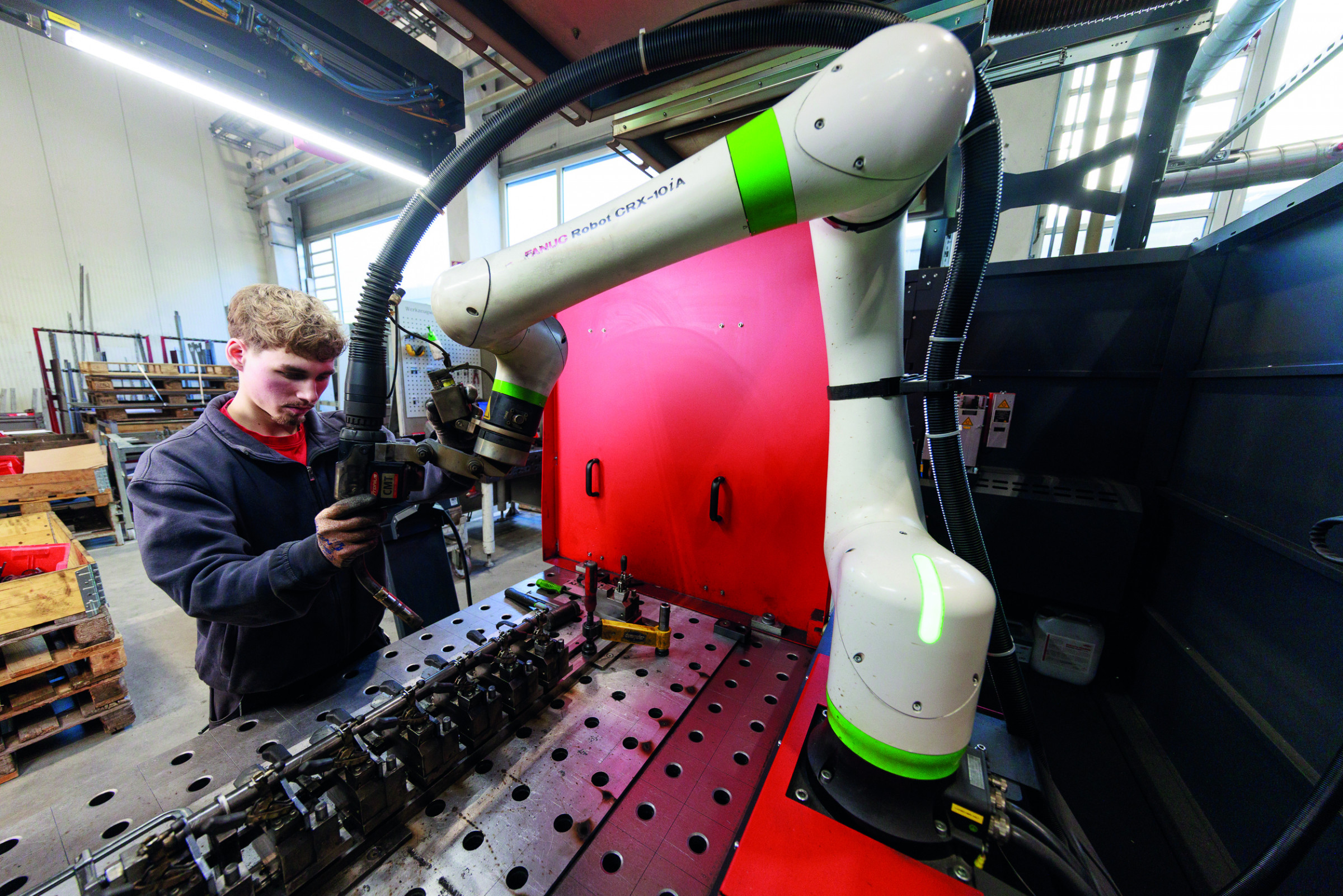
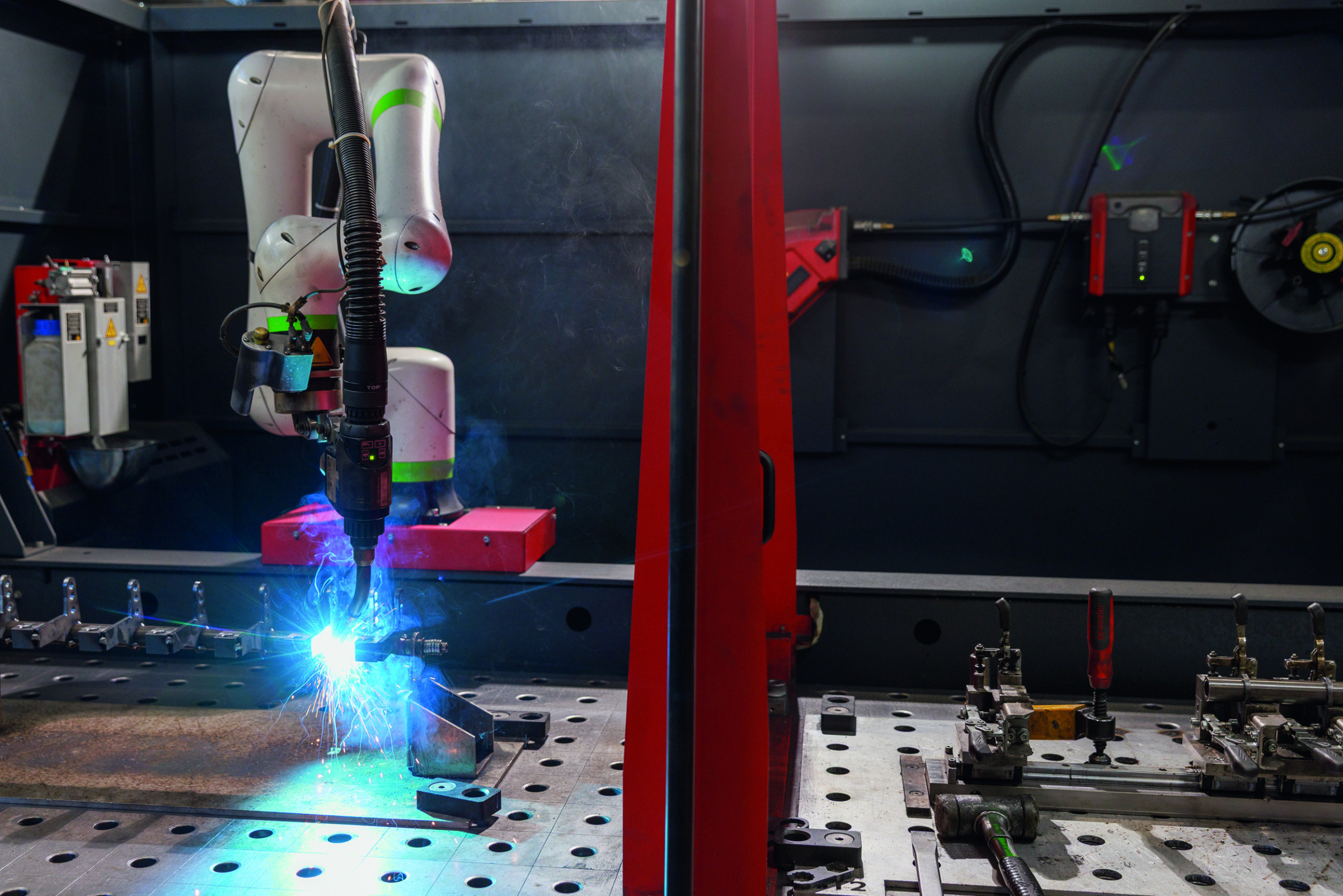
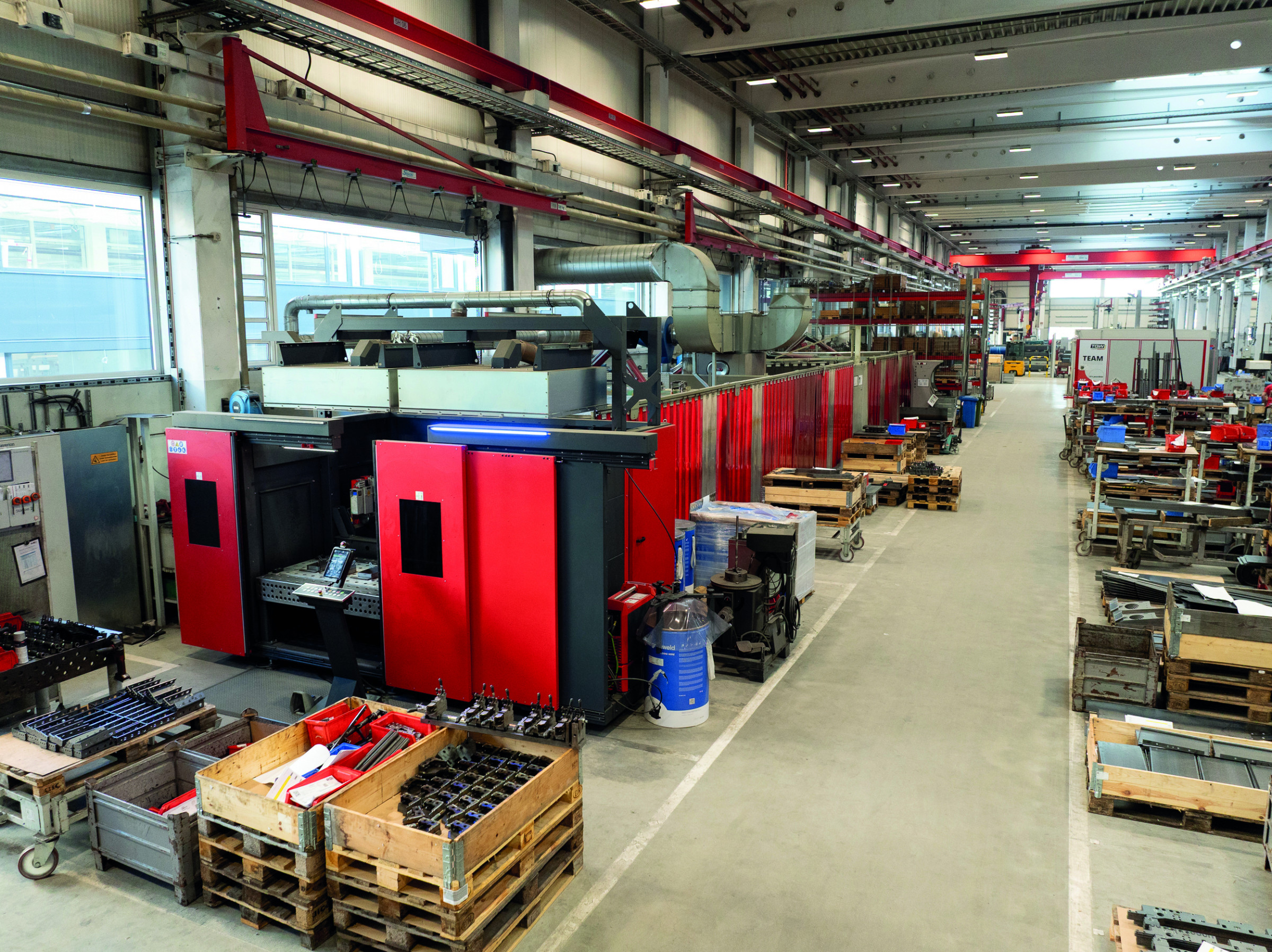
At the heart of the welding solution is the two-station concept, which allows welding and setup to be carried out simultaneously. While welding is taking place at one station, the second one can be set up. This significantly reduces downtime and increases output. Each station provides a work area measuring 1,500 × 1,000 × 600 mm and is designed to handle components weighing up to 2,000 kg. The partition wall can be removed in a few simple steps to accommodate particularly long components, creating a continuous 3,000-mm-long work surface. This is ideal for bulky structures or assemblies that previously required a lot of effort to position.
Effective accessibility thanks to an integrated longitudinal axis
The cobot is mounted on a mobile longitudinal axis that is fully integrated into the cobot control. This means two operating modes are available: the cobot can either incorporate the axis directly into the welding movement as an additional degree of freedom, or it can be positioned as desired along the rail. As a result, TGW Logistics does not need a positioner or rotary table; the components are secured to the welding table and welded in a single pass.
Intuitive programming in three steps
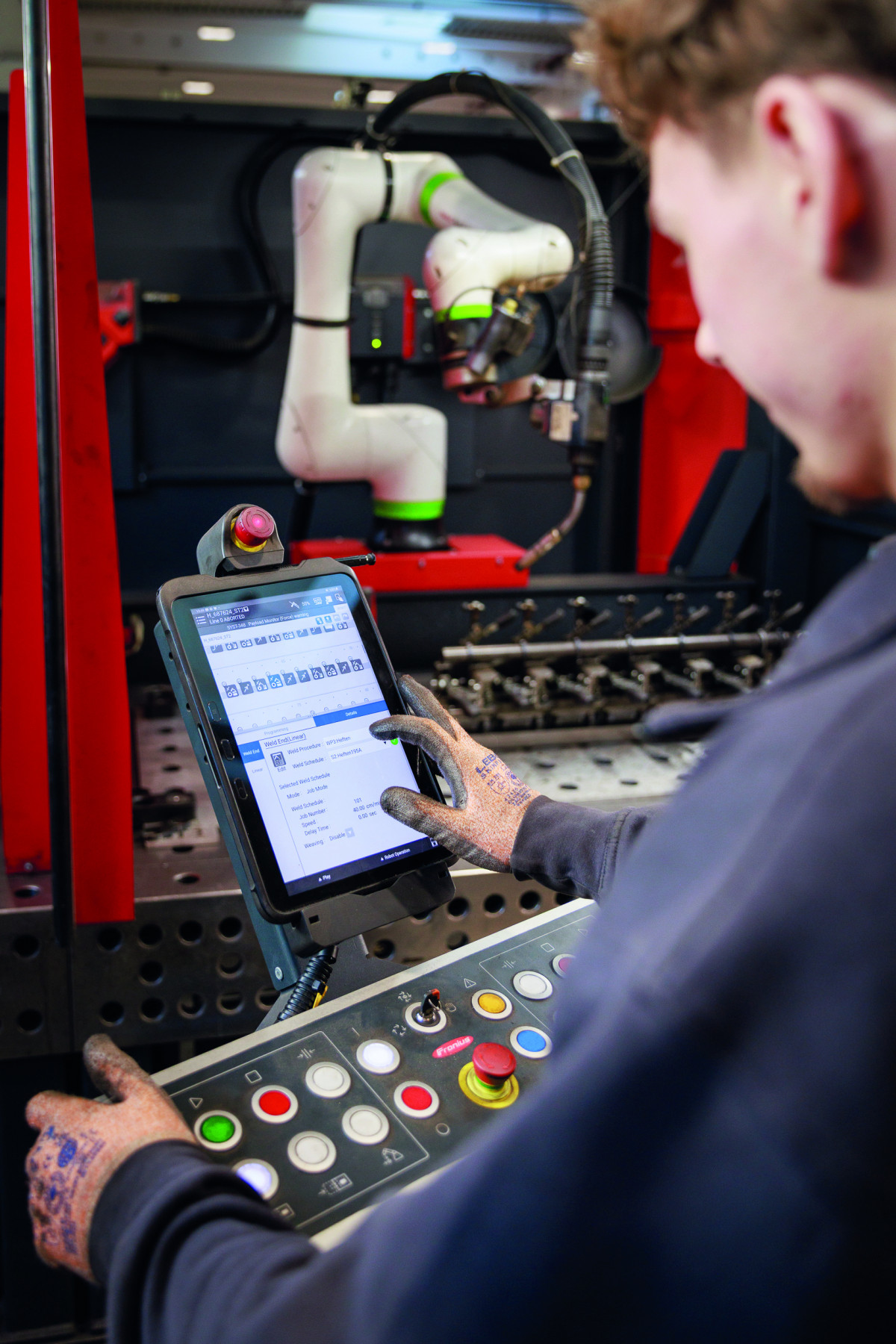
The CWC-D is intentionally designed to be easy to use. Welding programs are created at the cell itself using the ‘teach-in’ method and follow a clearly structured sequence:
- Define movement points on the teach panel.
- Teach the start, welding, and end points on the torch. The torch is guided from point to point, and each point is saved at the touch of a button.
- Select a predefined welding job on the teach panel (identified by material, sheet thickness, and weld seam type).
The drag-and-drop interface is designed so that even employees with little experience can quickly get to work. At TGW Logistics, an apprentice with a welding qualification operates the system independently; one example that demonstrates just how intuitive the system is to use. Compared to traditional welding robots (which typically require specialized personnel to program them), this gives employers greater flexibility in deploying their staff.
CE-certified safety at all times
Automatic safety doors, extraction hoods, UV protection and the cell’s enclosure ensure that welding fume is reliably extracted and arc radiation effectively shielded. The entire cell complies with the Machinery Directive 2006/42/EC and is CE-certified – a key consideration for TGW, where welding technology is closely integrated into existing production processes.
Flexible welding processes depending on the component
The Fronius TPS/i 400 CMT welding machine, integrated into the cobot welding cell, provides TGW Logistics with a wide range of welding processes. The relevant welding procedure specification (WPS) states when each process should be used. It defines the process parameters based on factors like the base material, component geometry, wall thickness, weld seam profile and required energy input. The specifications are prepared internally and approved by the welding supervisor and contain welding jobs with easily identifiable names.
“We classify the jobs by material and weld seam size; for example, steel plate, 3 mm, A3 weld seam,” explains Beidinger. “Technical specifications alone, such as the amperage, say little about what a job is actually intended for.” This clear classification ensures that approved welding processes can be uniquely identified and reproduced at any time, as well as reducing operator-induced variations while ensuring process reliability and repeatability throughout the entire joining process.
Proven arcs for most applications
At TGW Logistics, two processes are used for most of the welding tasks:
- Standard MAG arc:
A robust, universal process for the majority of steel components with medium to thick walls. Regarded as cost-effective, tried and tested, and stable, it's also the most commonly used process at TGW Logistics. Fillet welds in the horizontal position are primarily produced. This process is particularly well-suited for S235 – a low-carbon structural steel with good weldability that is predominantly used in manufacturing. - Pulsed arc:
A key feature of this process is the controlled droplet detachment achieved by alternating between base current and pulse current. The result is a low-spatter arc across the entire power range, combined with higher welding speeds compared to a standard arc. At TGW Logistics, this process is primarily used for more complex seam geometries and when there are stricter requirements on seam formation. It also provides the necessary process control for the higher-strength S355 steel with an increased carbon equivalent, which is used in some applications.
Additional processes are called on to meet specific requirements:
- CMT (Cold Metal Transfer):
The reversing wire movement, with frequencies of up to 170 Hz, produces an exceptionally stable arc with approximately 33% less energy input. At the same time, welding speeds can be almost doubled compared to those of conventional dip transfer arc welding. This process is particularly suitable for thinner sheets, where the influence of heat and distortion are critical factors. - PMC (Pulse Multi Control):
PMC builds on the pulsed arc technology by incorporating adaptive process control with multiple digital stabilizers. These continuously monitor and influence key process parameters, such as arc length, penetration behavior, arc pressure and ignition characteristics. The result is an extremely stable, low-spatter welding process with uniform seam formation and high repeatability – especially for complex seam geometries.
The individual processes are not always used in isolation; they are also combined to make the most of their respective strengths taking into account the component, seam requirements and material.
Efficient, reproducible and flexible processes
When selecting components for the cobot, TGW Logistics follows a clear strategy: only parts that can be fully welded in a single pass are used. “Nothing else makes sense,” explains Beidinger. “Remove any spatter, clean it, touch it up a bit and it’s ready. Whether I weld individual components ten or two hundred times, once it’s been taught, I get the same result every time.” The company’s day-to-day work demonstrates just how significantly the CWC-D has transformed its workflows. Many of the recurring components come in several variants, so TGW Logistics now manages approximately 250 pre-programmed welding programs on its network.
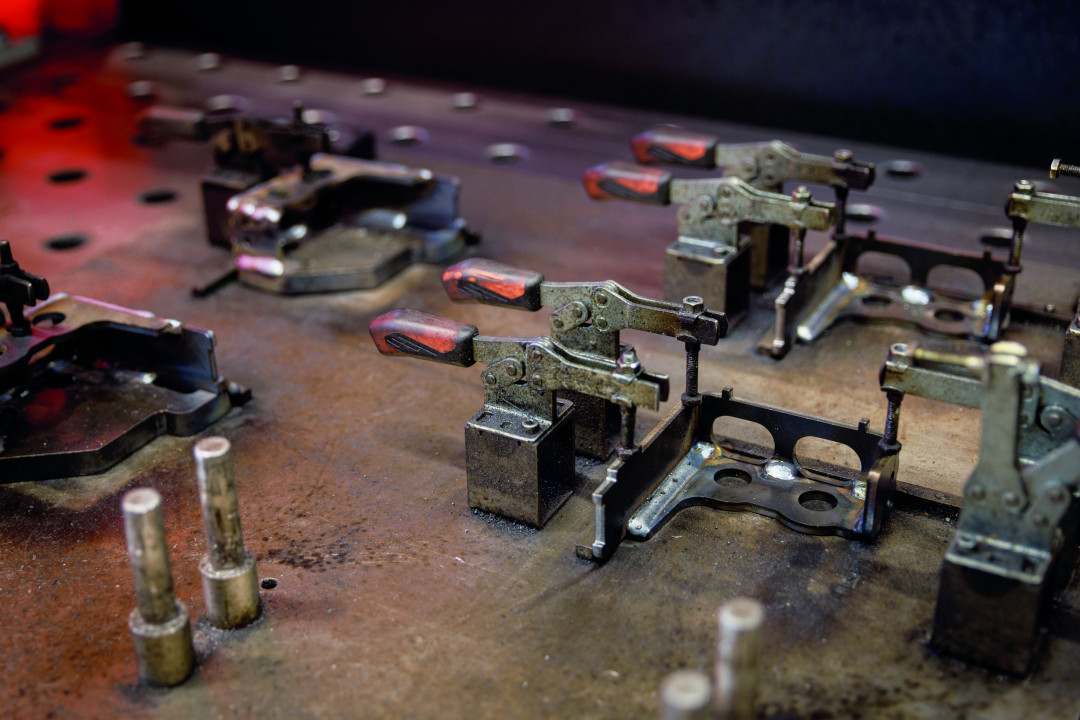
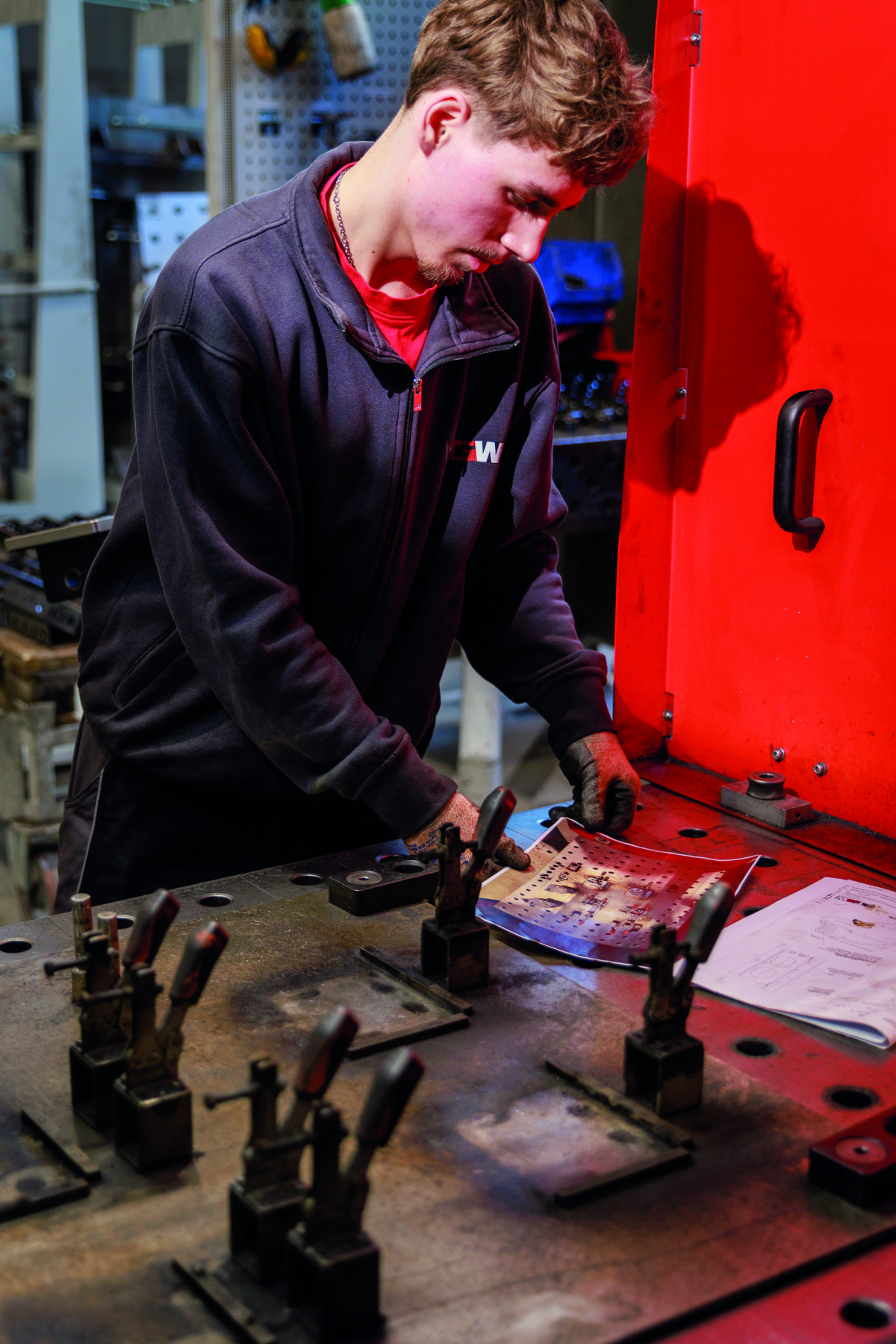
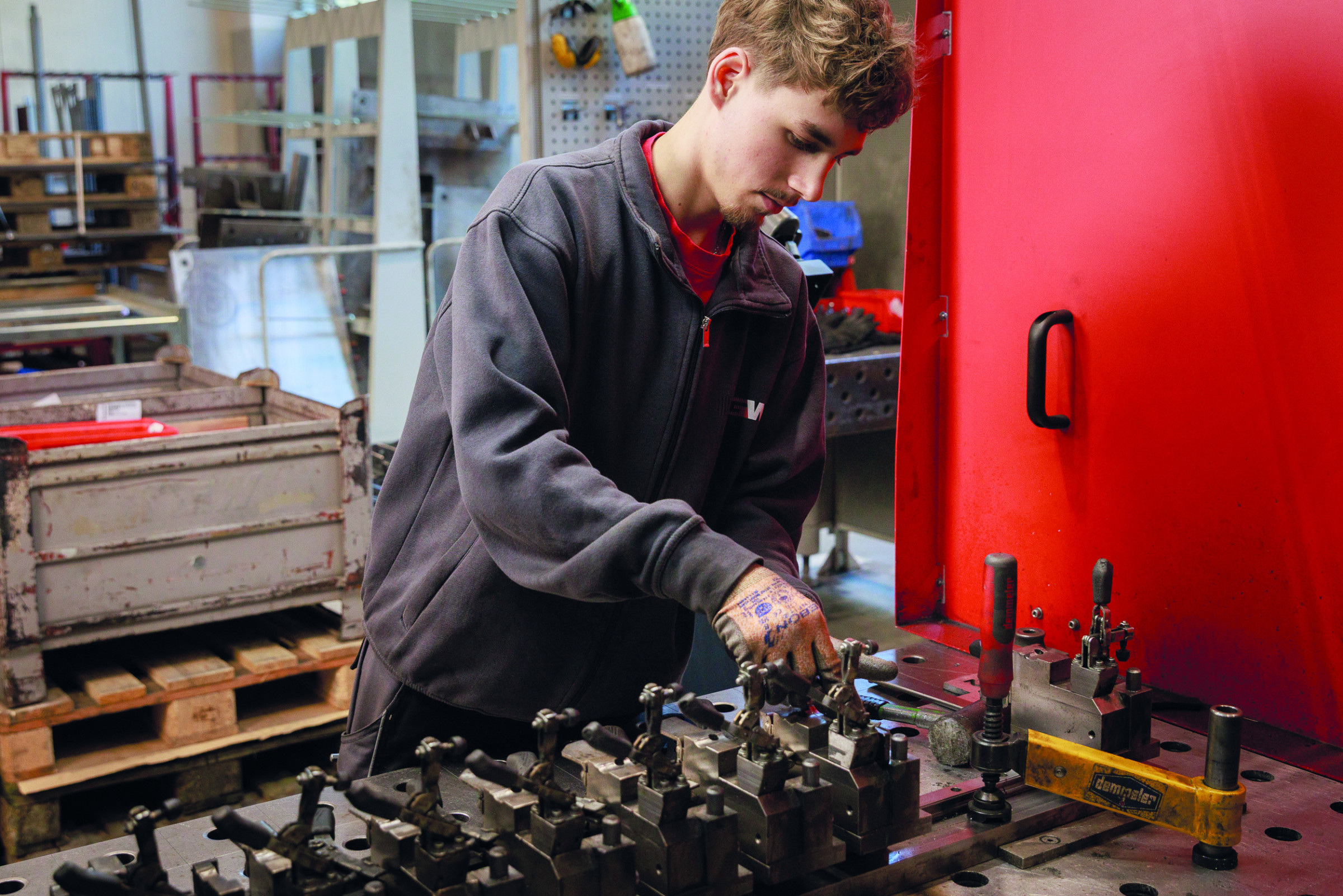
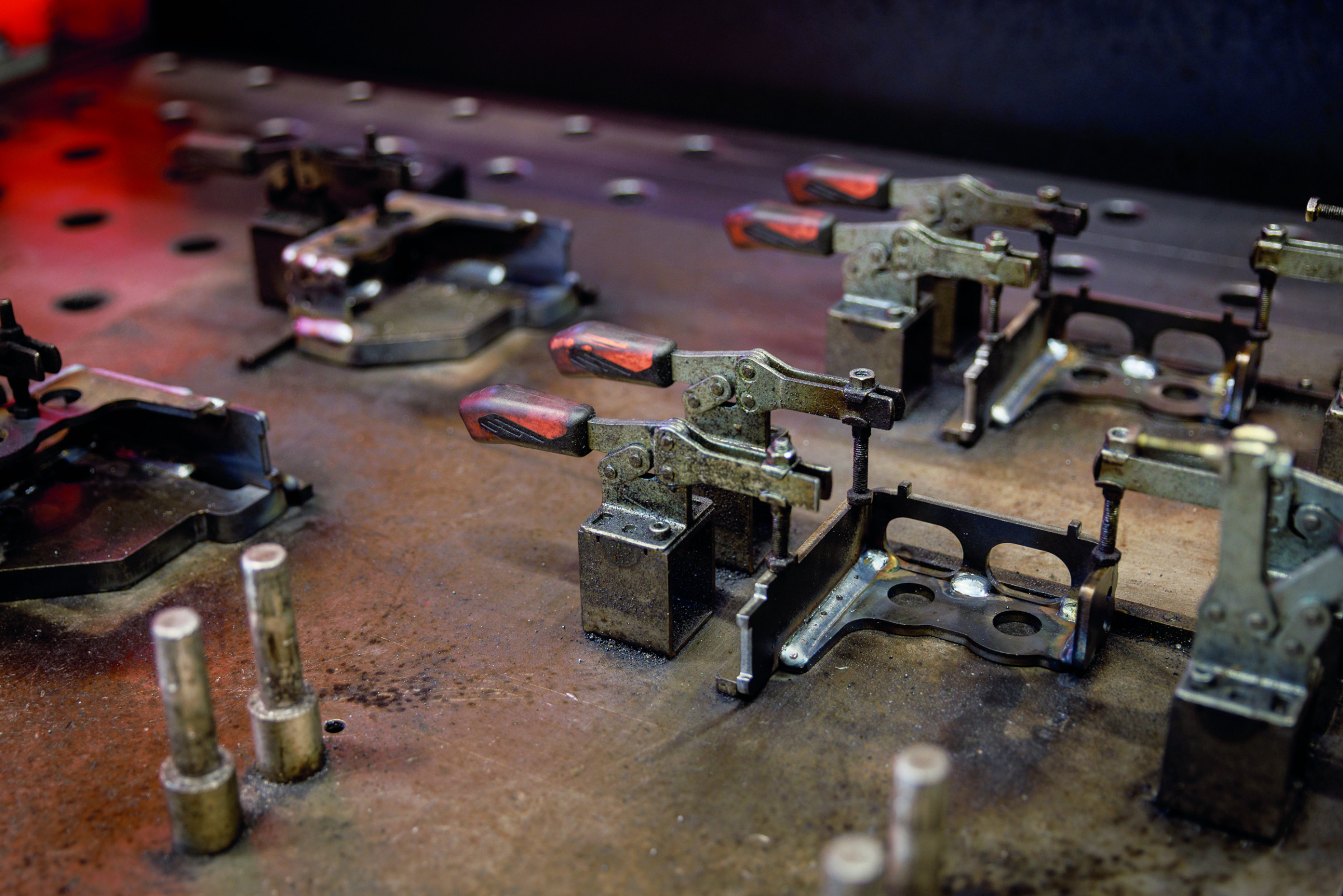
TGW Logistics ensures that workpieces of the same type are always clamped in exactly the same position using setup instructions with photos known as ‘photo sheets’. They document both the exact position of the parts on the welding table and the specified clamping sequence, as the order in which the parts are clamped also affects potential distortion. This clearly defines the setup process for the operating personnel so it is reproducible. While the cobot is welding at station 1, station 2 can already be set up. In addition to the Fronius arc technology, automated torch cleaning also ensures stable welding processes. After a certain number of welding cycles, the Robacta Reamer V automatically cleans the interior of the gas nozzle and applies an even layer of parting fluid to prevent spatter from adhering.
If components require a final run in addition to the root pass, TGW Logistics makes strategic use of the cooling time needed between runs. While the first component is cooling, another part is fully welded at the second station. The ‘t₈/₅ time’, as it is known, is determined empirically and stored in the welding program. In practice, however, it has become apparent that separate waiting times can often be eliminated. If there are multiple components on the welding table, the first one will have cooled sufficiently by the time the root weld seam of the last component has been welded. The final run can therefore be completed immediately afterward. Complex geometries that still require manual welding continue to be handled by experienced specialists. Automation relieves them of repetitive tasks; those that neither make full use of their skills nor are particularly motivating.
Conclusion: a solution that makes TGW Logistics more productive and consistent
In the CWC-D, TGW Logistics has found a welding solution that meets its specific demands: a wide range of variants, fluctuating production volumes, different geometries. Plus, it addresses a labor market where skilled welders are becoming increasingly scarce. The combination of user-friendly operation, a flexible work area, stable process control and high repeatability has proven to be a key factor in boosting productivity. “The investment paid for itself sooner than expected,” Beidinger concludes. “Depending on the application, we now weld 20 to 30 % faster than we did manually. What’s more, the weld seams are cleaner, there’s less rework required and significantly less distortion thanks to the controlled heat input. That’s what makes the difference.”
Cobot welding is particularly beneficial for small batch sizes and frequently changing components. A clearly structured combination of a cobot welding cell, a defined WPS, and clearly identifiable jobs makes welding processes readily available, reliably reproducible and consistent regardless of the operator.
(Source: Fronius International GmbH)
Schlagworte
AutomationCMTCNCCobotCobot WeldingCold Metal TransferManual WeldingPMCPulse Multi ControlWelding