
16.07.2026
Veranstaltung
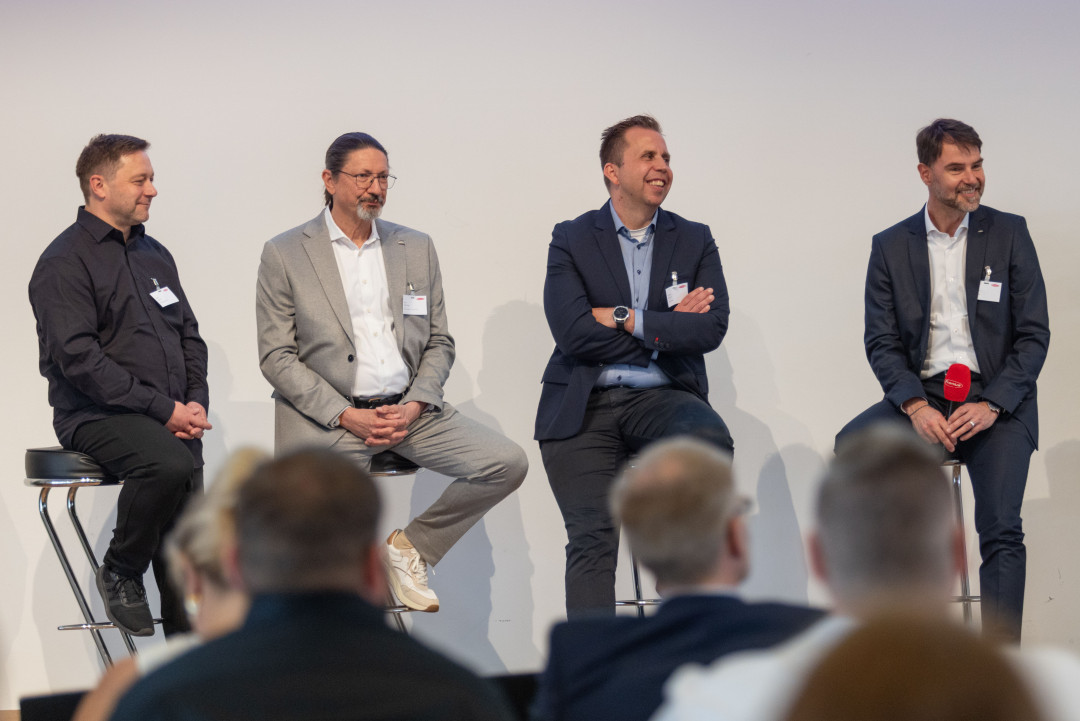
This year Fronius hosted the international automotive conference Joining Smart Technologies for the 8th time. The panel featured representatives from companies in the automotive and supplier industries, along with experts from the fields of artificial intelligence and joining processes. The diverse programme fostered an engaging exchange of ideas and knowledge about joining technologies and the latest industry developments.
The expert presentations at the Joining Smart Technologies conference focused on trending topics including sustainability, artificial intelligence and technologies in automotive body construction, as well as current political and economic challenges facing the automotive industry. It was readily apparent that the industry is not lacking in promising solutions or innovative drive; something that left a clear impression on the appr. 70 international participants. They used the event in Sattledt, Austria, as an opportunity to exchange expertise and experience.
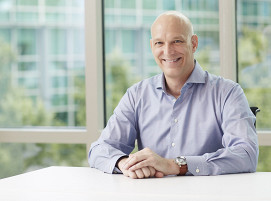
“Innovation and value creation require collaboration within the industry. Only by working together can we take on the challenges of today and tomorrow. That’s why I am all the more delighted that Fronius once again hosted the automotive industry on the occasion of the Joining Smart Technologies conference,” enthused Fronius CEO Elisabeth Engelbrechtsmüller-Strauß. One reason behind the event’s renewed success was the diversity of its participants. Competitors, representatives of competing joining processes and attendees from outside the industry engaged in conversation, giving each other the opportunity to broaden their perspectives.
Artificial intelligence: an opportunity and a challenge
Professor Thomas Gremsl from the University of Graz offered an outside perspective in his lecture “People front and center: the importance of ethics in the context of artificial intelligence. He explained that technology opens up many possibilities, but using it requires expertise and clear guidelines. AI development demands interdisciplinary collaboration, in which ethical considerations must be taken into account at every stage. Dr. Florian Schlather of BMW AG also stressed that AI cannot and must not be used without a definitive direction, underlining one thing that he believes is crystal clear: AI cannot replace people’s knowledge, experience and other soft skills, although it can certainly support them. A solid data foundation is crucial for this, and companies must be prepared for a transformation in the way they work.
Sophisticated procurement strategies and the circular economy
Transformation and change are also needed in procurement strategies, a topic addressed by Ulrich Fischer of Lincoln Europe. It is no longer enough to simply offer the cheaper product; suppliers are expected to embody a multidimensional set of values that includes not only shared values regarding corporate ethics and sustainability, but also smart procurement strategies based on a holistic approach. Thomas Rauser of Trumpf reinforced this perspective and explored the principles of the circular economy in depth during his presentation. With rising material costs and ongoing supply chain challenges, adopting these principles is becoming increasingly important. This requires companies to adapt their processes accordingly, starting with product design and the use of standardized components.
Joining processes as key technology
Joining processes hold particular relevance in this context: they are essential on a range of production lines and must be able to meet the demands of the future. Jürgen Bruckner of Fronius International highlighted electricity as a key factor, noting that it serves as the driving force behind modern society. To ensure a sustainable future, all processes powered by electricity must become highly efficient; including welding. The efficient use of electricity is a core area of expertise at Fronius. Something that is evident in the company’s own solutions including inverters, welding machines and battery charging systems. Energy costs and the meaningful use of resources play a role here, a fact that was highlighted by Dr. David Schönmayr and Dr. Bernhard Freiseisen of Fronius International. It is the industry’s shared responsibility to solve the problem of energy costs and this requires that we determine where and how specific measures can be implemented and what benefits they offer to customers in the industry.
For Daniel Rudolph of Audi, reducing costs and consuming less resources are further essential factors in reestablishing welding as the primary joining technology in the automotive industry over the long term. Technologies for comprehensive seam visualization and solutions for reducing rework will play a crucial role in this regard. Expanding on this theme, Dr. Holger Fricke of the Fraunhofer IFAM in Bremen brought the topic of bonding into the discussion. Adhesive bonding plays a central role in electric vehicle manufacturing. To support recyclability, it is increasingly important to design detachable adhesive bonds from the very beginning of the development process. This lays the foundation for efficient and cost-effective disassembly at the end of the product life cycle. Olaf Gross and Philipp Hager from Lufthansa Technik offered another perspective, examining the theme of maintenance. When it comes to safety, quality takes precedence over speed, while at the same time, the “repair instead of replace” approach is gaining importance. A particularly suitable method for this is CMT (Cold Metal Transfer), which enables repair welding at lower temperatures, shortens process times, and delivers economic benefits without compromising quality.
Change is afoot in the automotive industry
Software is becoming increasingly important in cars and, according to Peter Ivanov of Valtech, this trend is clearly visible in the market. Automotive manufacturing is becoming more modular and is increasingly attracting players from other industries. To remain competitive, companies need to develop a clear joint strategy and view the vehicle as part of a broader ecosystem. In his presentation titled “Multi-Material Mix vs. Gigacasting,” Karl Radlmayr of KMR metalwise examined the impact on car bodies of new market entrants with limited experience in welding and forming technologies. In his view, the multi-material mix offers significant advantages over gigacasting, particularly in terms of repairability, despite higher manufacturing costs.
During the closing panel discussion, industry representatives expressed optimism about the future. At the same time, the emphasize was on the need to jointly address key challenges such as high energy costs, market volatility, circular economy principles and the importance of staying close to customers.
(Source: Fronius International GmbH)
Schlagworte
AutomationAutomotiveCuttingMIGOEMPlasmaRoboticTIGWeldingWIG