
08.05.2025
International
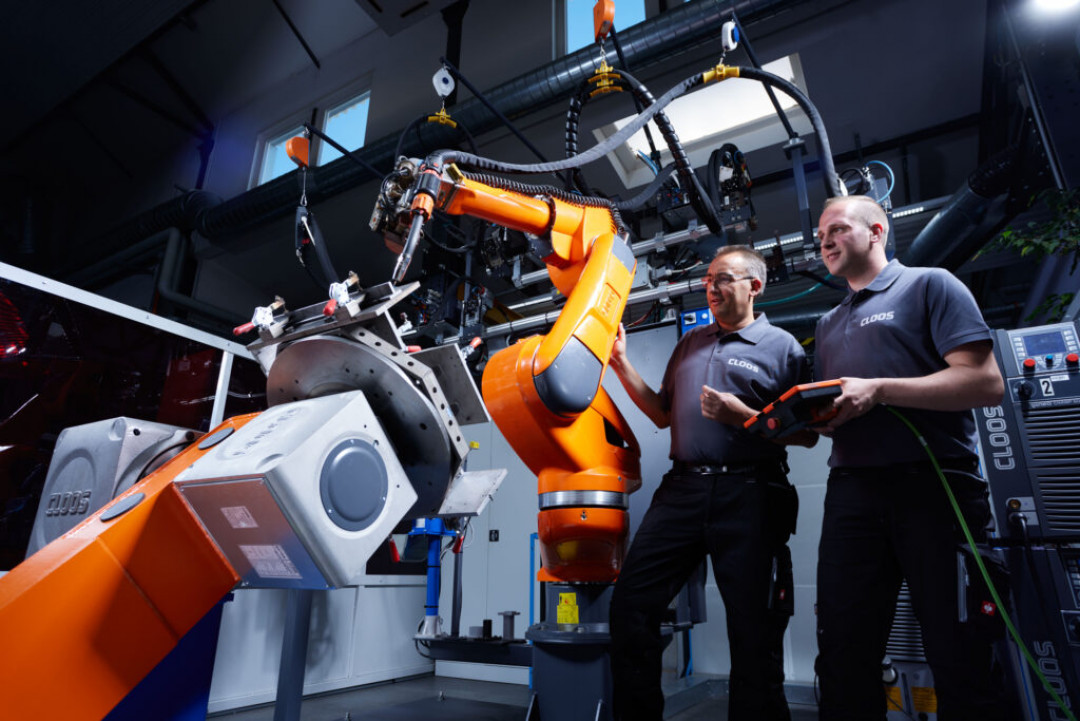
In a recent LinkedIn poll, Cloos asked the welding community to weigh in on the most valuable feature for a robotic welding solution. The results were clear - though divided. With 38 % of participants prioritizing ease of use and another 38 % emphasizing speed and efficiency, the poll underscores two critical challenges in welding automation. But how does the company bridge this gap?
At Cloos, they believe that understanding these priorities is the first step to crafting effective solutions. Let’s dive into these two essential aspects and explore how welding automation can address them.
The Demand for Ease of Use
For many businesses, adopting robotic welding solutions can feel intimidating. Complex programming interfaces and steep learning curves often lead to hesitancy. However, the need for user-friendly solutions has never been greater. With skilled labor shortages impacting industries worldwide, automation must empower operators of all experience levels.
Cloos addresses this challenge by focusing on intuitive interfaces and streamlined workflows. Our systems are designed to reduce setup times, simplify programming, and allow operators to quickly adapt to new tasks. By prioritizing ease of use, we help businesses embrace automation with confidence, minimizing downtime and maximizing productivity.
Speed and Efficiency: The Need for Throughput
On the flip side, speed and efficiency remain paramount for manufacturers aiming to stay competitive. Robotic welding solutions must deliver consistent, high-quality results at an accelerated pace to meet production demands without compromising on precision.
Cloos robotic welding equipment is engineered to optimize cycle times and maintain accuracy, ensuring that businesses can scale operations efficiently. Their solutions use smart welding techniques and efficient planning to help partners meet their production goals while maintaining high quality.
Finding the Balance: A Tailored Approach
Every business’s needs are unique. For some, simplicity in operation is the top priority. For others, it’s all about ramping up production speeds. At Cloos, they collaborate closely with our partners to identify their specific pain points and tailor solutions that balance ease of use with operational efficiency.
By leveraging decades of expertise in welding technology, we strive to make the transition to automation seamless and effective. The goal is not only to provide cutting-edge equipment but also to empower our partners with the knowledge and support they need to thrive.
Embracing the Future of Welding Automation
Ease of use and speed are not mutually exclusive. In fact, the most innovative solutions achieve both. As the welding industry evolves, Cloos remains dedicated to bridging the gap between these priorities, delivering robotic welding systems that simplify workflows and accelerate production.
(Source: News by Cloos Group)
Schlagworte
AIAutomationCADCuttingLEDRobotRobotic WeldingWeldingWelding EquipmentWorkflow